Our Team

Head of Department
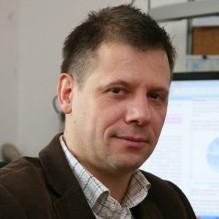
Mihael Mohorčič

Head of Department

Research in mobile/wireless communications, IoT, smart applications.

I am a Principal Investigator and Head of the Department of Communication Systems at JSI and a professor in telecommunications at the Jozef Stefan International Postgraduate School. My research and working experience is mainly in mobile and wireless communications, recently focusing on AI-supported resource management, smart infrastructures and signal intelligence.

Personal Page

Heads of Laboratories

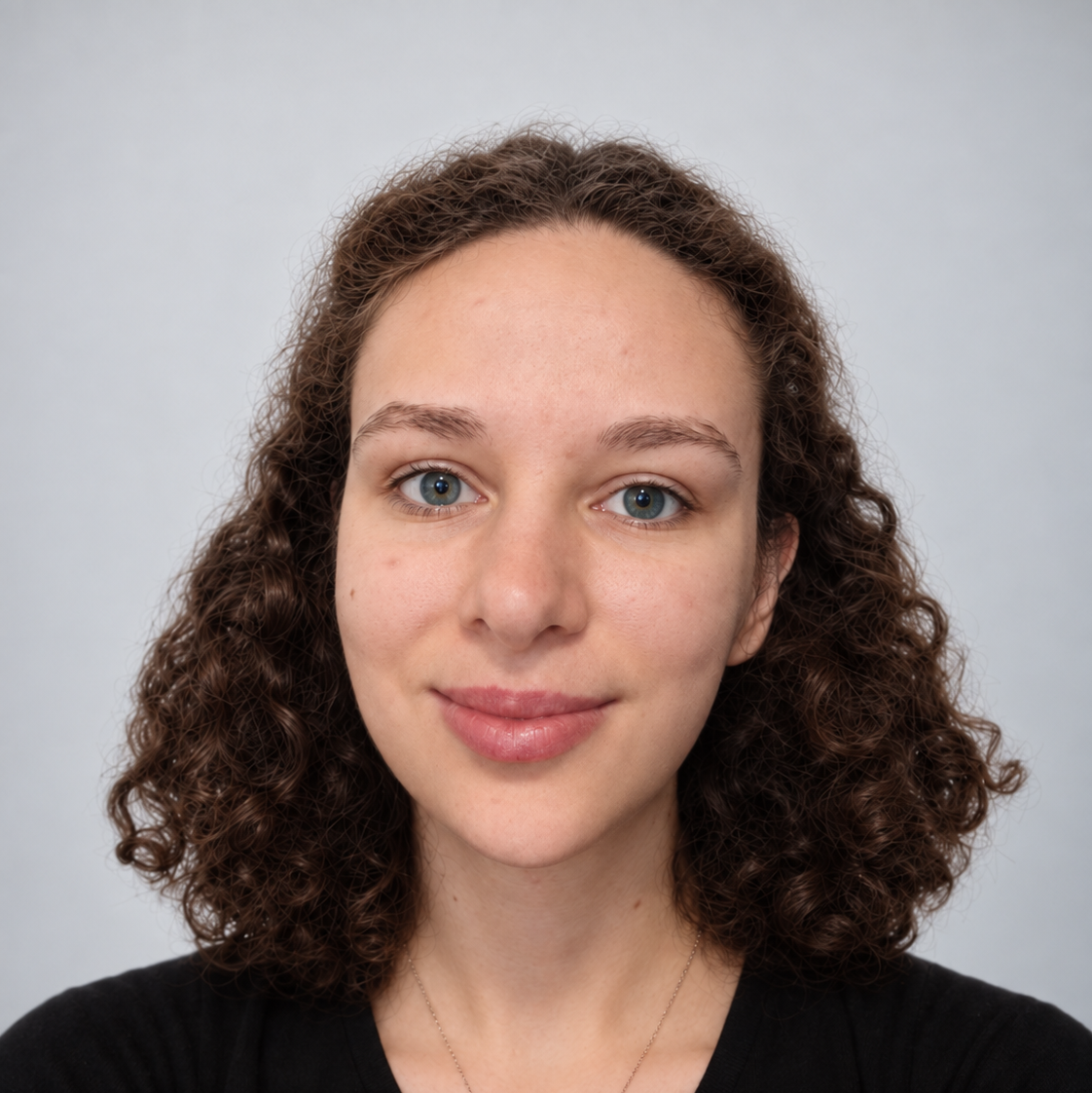
Carolina Fortuna

Head, ICC

AI & ML for wireless and IoT networks.

Profile
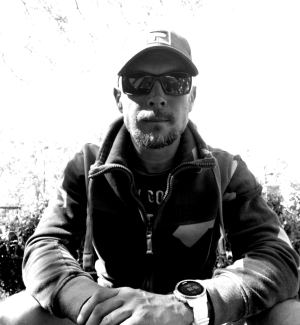
Intelligent Communications and Computing Laboratory (ICC), head

I am a research fellow working at the Department of Communications Systems at the Jozef Stefan Institute in Ljubljana, Slovenia. I also work with the Data Science team in Bloomberg Media and co-founded Comsensus. In my research I use technologies from the broad field of artificial intelligence, including machine learning, data mining and symbolic AI to solve problems in wireless and IoT networks. For more details, see my publications on Google Scholar, Research Gate, and my LinkedIn profile.

Personal Page
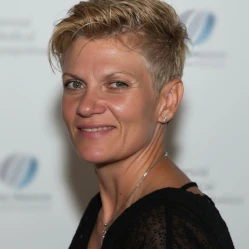
Gregor Kosec

Head, SC

Algorithms for computationally intensive and distributed problems.

Profile
The Scientific Computing Laboratory (SC), head

Gregor Kosec graduated from the University of Ljubljana, Faculty of Mathematics and Physics, in 2006 and received his PhD from the University of Nova Gorica in 2011. In 2011, he became a member of the The Scientific Computing Laboratory at the Jožef Stefan Institute and in 2020 he became the head of the laboratory. His main research interests are numerical modelling, meshless methods and thermal modelling of power grids.

Personal Page

Researchers

Aleksandra Rashkovska
Dr. Aleksandra Rashkovska received her Ph.D. degree in Computer Science from the IPS Jožef Stefan, Ljubljana, Slovenia in 2013. She is currently a Research Associate at the Department of Communication Systems, Jožef Stefan Institute, Ljubljana, Slovenia. She was a visiting researcher at the Department of Computer Science, University of Bari Aldo Moro, Italy from November 2014 until October 2015. Her research interests include advanced bio-signal analysis, computer simulations in biomedicine, biomedical applications of data mining and control theory, and data mining in sensor networks. She is also involved in the development of a wireless body sensor and supporting ECG analysis.

Personal Page
Andrej Čampa
Role: Senior Researcher
Joined: March, 2020
Affiliations: Comsensus, Jožef Stefan Institute

Personal Page
Blaž Bertalanič
Blaž Bertalanič is the Group Co-Lead of SensorLab and a Senior Researcher at the Department of Communication Systems at the Jožef Stefan Institute. He received his PhD Summa Cum Laude in Electrical Engineering from the University of Ljubljana in 2024. His research focuses on developing next-generation AI algorithms, including graph neural networks and LLM-based AI agents. Ranked among the top 10 telecommunications researchers in Slovenia, he actively leads international research initiatives. He also served as a Work Package Leader for the Horizon Europe NANCY project, the Departmental PI for the HE AcceptRemote project, and Secretary of the IEEE Slovenia Section.

Personal Page
Dawid Strzelczyk
Graduated from Wrocław University of Science and Technology (Eng.) and Warsaw University of Technology (M.Sc.) in the fields of Mechanical Engineering. Obtained PhD in the field of Physics and Astronomy at University of Wrocław, where his research focused on the development and applications of meshless Lattice Boltzmann Method. His scientific interests are (computational) fluid dynamics (especially Lattice Boltzmann Method), numerical methods and porous media.

Personal Page


ORCID:https://orcid.org/0000-0001-5431-533X

Denis Sodin
Denis Sodin received his BSc and MSc degree from electrical engineering from the University of Ljubljana in 2014 and 2017 respectively. His current work focuses on improving adaptive under-frequency load shedding schemes and applicability of Phasor measurement units (PMU) data for the purposes of fault detection and localization in distribution power networks.

Personal Page
Filip Strniša
Received his M.Sc. in Chemical Engineering at the University of Ljubljana. He is currently a research assistant at the Department of Communication Systems, Jožef Stefan Institute. Among his research interests are modelling transport phenomena, the lattice Boltzmann method, and parallel computing.

Personal Page
Gregor Cerar
Gregor Cerar received his Bachelor’s (2013) and Master’s (2016) degrees from the Faculty of Electrical Engineering of the University of Ljubljana, where he completed the Telecommunications study programme, and the Ph.D. degree (2021) from International Postgraduate School of Jožef Stefan in Information and Communication technologies with the Department of Communication Systems, Jožef Stefan Institute. He is currently a research associate with the Department of Communication Systems, Jožef Stefan Institute. Main research interests: Artificial Intelligence, Smart Infrastructure, Wireless Networks, and MLOps.


Personal Page

Ke Guan
Dr. Ke Guan received B.E. degree and Ph.D. degree from Beijing Jiaotong University in 2006 and 2014, respectively. He is a Professor in State Key Laboratory of Rail Traffic Control and Safety & School of Electronic and Information Engineering, Beijing Jiaotong University. In 2015, he has been awarded a Humboldt Research Fellowship for Postdoctoral Researchers. In 2009, he was a Visiting Scholar with Universidad Politecnica de Madrid, Spain. From 2011 to 2013, he was a Research Scholar with the Institut fuer Nachrichtentechnik (IfN) at Technische Universitaet Braunschweig, Germany. From September 2013 to January 2014, he was invited to conduct joint research in Universidad Politecnica de Madrid, Spain. He has authored/coauthored two books and one book chapter, more than 220 journal and conference papers, and four patents. His current research interests include measurement and modeling of wireless propagation channels, high-speed railway communications, vehicle-to-x channel characterization, and indoor channel characterization for high-speed short-range systems including future terahertz communication systems.
Klemen Bregar
Klemen Bregar received his B.Sc. degree in electrical engineering from the University Of Ljubljana, Ljubljana, in 2013. He currently works as a research assistant at the Department of Communication Systems at Jožef Stefan Institute, Ljubljana, and is pursuing his Ph.D. in Information and Communication Technologies at the Jožef Stefan International Postgraduate School. His research and working experience include the development of embedded systems, wireless sensor networks, biomedical sensor systems and machine learning. His recent research interests include indoor localization, ultrawide bandwidth communication systems, biomedical wireless sensor networks and the application of deep learning neural networks. He is currently involved in H2020 projects eWine and SAAM and contributes to a national applied research project on advanced ray-tracing techniques in radio environment characterization and radio localization (L2-7664).


Personal Page

Magd Abdel Wahab
Obtained his PhD in fracture mechanics from the KU Leuven in Belgium. His research interests are mainly in the fields of applied mechanics, fracture mechanics and structural dynamics of structures with emphasis on the detection and assessment of damage, the investigation of long-term durability and failure mechanisms and the analysis of fractures using various numerical methods.

Personal Page
Matija Cankar
Dr. Matija Cankar is a Slovenian computer scientist specializing in computer structures, systems, networks, and interactive technology. He earned his Bachelor of Science degree in 2008 and his Ph.D. in 2014, both from the University of Ljubljana’s Faculty of Computer and Information Science . Professionally, he has held various roles in the tech industry. Since October 2024, he has been serving as a development engineer and researcher at ComSensus. Concurrently, he joined the Jožef Stefan Institute’s Department of Communication Systems as a research fellow. His work reflects a strong commitment to advancing computer science, particularly in software development, interactive technologies, and artificial intelligence applications.


Personal Page

Matjaž Depolli
Dr. Matjaž Depolli received a PhD in computer and information science from Jožef Stefan International Postgraduate School Ljubljana in 2010. He currently hold the position of research assistant at the Department of Communication Systems at the Jožef Stefan Institute in Ljubljana. His research interests include evolutionary computation, computer simulation of physical phenomena, parallel computing, artificial intelligence, and biomedical research. He is also involved in the development of wireless body sensors, software for ECG analysis, cluster management software, and cloud services.

Personal Page

Maciej Grzegorz Matyka
MSc in Computer Physics at the Faculty of Physics and Astronomy, University of Wrocław. He is currently a research and teaching fellow at the Institute of Theoretical Physics at UWr, where he obtained his PhD in 2009. He is interested in physics of fluid flow, porous media, computer simulation methods, programming, new technologies in computer science, parallel computing including GPU and compute shaders, machine learning, complex systems and physics education, demoscene, computer graphics and physically based modelling in computer animation.

Personal Page

Miha Rot
Miha Rot received his B.Sc. and M.Sc. in physics at the Faculty of Mathematics and Physics, University of Ljubljana and his PhD at The Jožef Stefan International Postgraduate School. He is currently a PhD Student at the Jožef Stefan International Postgraduate School. His research interests include meshless methods, computational hydrodynamics and stabilisation schemes.

Personal Page

Roman Novak
Roman Novak received his MSc and PhD degrees in computer science from the University of Ljubljana in 1995 and 1998, respectively. He is a senior research fellow at the Department of Communication Systems of the Jozef Stefan Institute in Ljubljana, Slovenia since 1992 and an assistant professor at the Jozef Stefan International Postgraduate School since 2007. He was a visiting scientist at the Joanneum Research Forschungsgesellschaft, Graz, Austria in 2008. He participated in several major projects in the field of design and development of telecommunication systems. His latest research interests include radiofrequency ray tracing and parallel algorithms in general. His previous research interests have been focused on routing in communication networks, information security topics, as well as on signal processing for nuclear spectroscopy and others. He is a member of the IEEE and the ACM.

Personal Page

PhD Students

Ana Jeknić
Ana Jeknić received her BSc and MSc degrees from the Faculty of Electrical Engineering at the University of Montenegro, specializing in Electronics, Telecommunications, and Computers (BSc) and Telecommunications (MSc) in 2020 and 2024, respectively. She was a Teaching Assistant at the Faculty of Electrical Engineering at the University of Montenegro from 2021 until 2024. She currently works as a young researcher in the Department of Communication Systems at the Jožef Stefan Institute, Ljubljana, and is pursuing her Ph.D. in Information and Communication Technologies at the Jožef Stefan International Postgraduate School. Her research interests include wireless networks, terahertz communications, 6G communication systems, and integrated sensing and communication.
Andrej Čop
Andrej Čop received a joint MSc degree in computational engineering at FAU Erlangen, Germany and USI Lugano, Switzerland in 2026. His research interests are AI agents, MLOps, and network systems. He was involved in the EU project NANCY and participated as an intern at CERN OpenLab.
Andrej Kolar - Požun
Received his M.Sc. in mathematical physics at the Faculty of Mathematics and Physics, University of Ljubljana. He is currently working on Bayesian dynamic modeling.

Personal Page

Jon Vehovar
Jon Vehovar received his B.Sc. and M.Sc. in physics at the Faculty of Mathematics and Physics, University of Ljubljana. He is developing meshless methods for HPC systems.

Personal Page

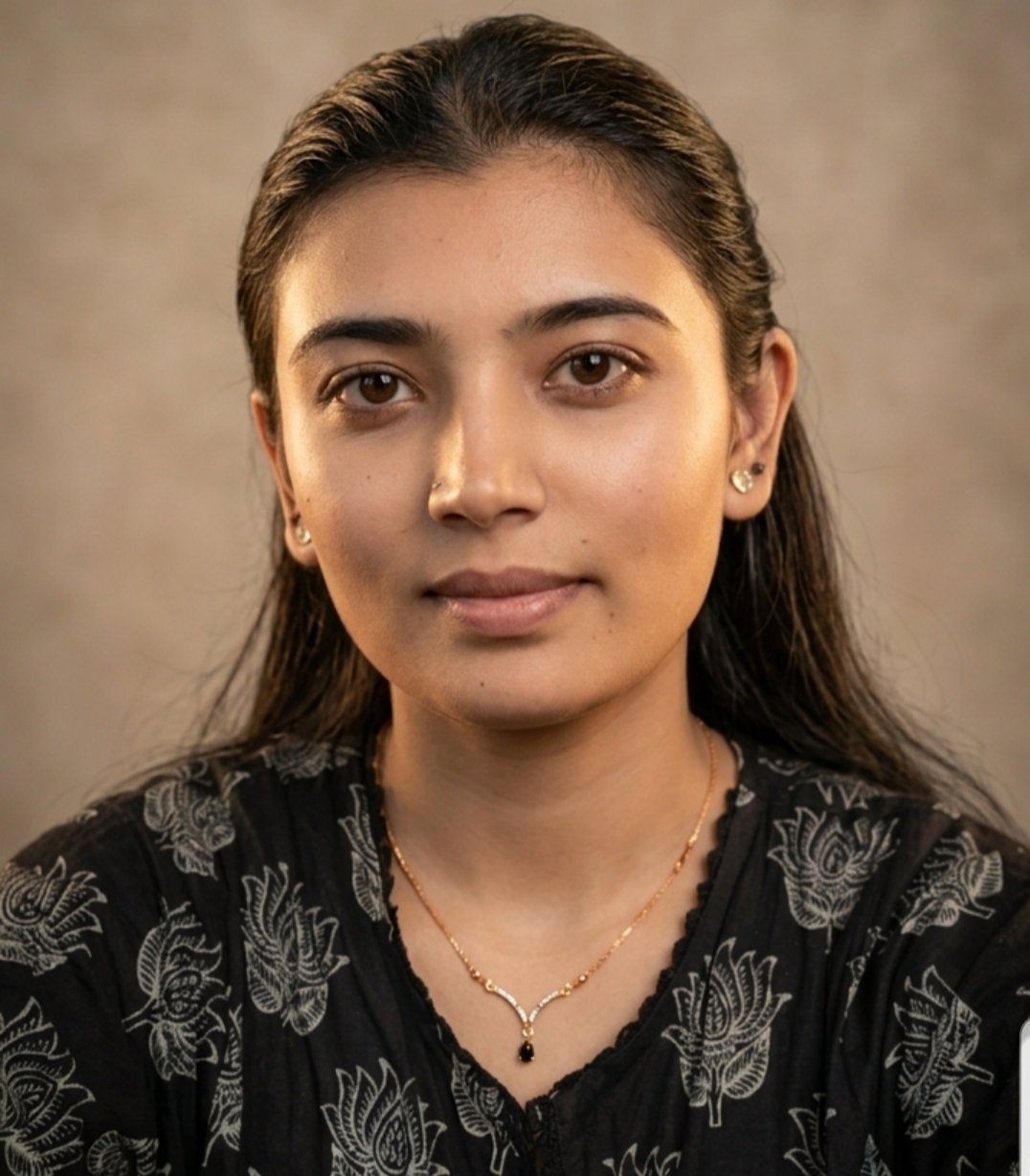
Neha
I received the B.S. degree in Physics from the University of the Punjab, Lahore, Pakistan, in 2022, and the M.S. degree in Physics from COMSATS University Islamabad, Lahore Campus, Pakistan, in 2025. I am currently carrying out research on the numerical modeling of nanoelectromechanical systems (NEMS), combining higher-order continuum mechanics, molecular dynamics, and modern meshless numerical methods.

Linkedin

Personal Page

Nika Mlinarič
Received her B.Sc and M.Sc in physics at the Faculty of Mathematics and Physics, University of Ljubljana. She is currently a PhD student at the Department of Communication Systems at the Jožef Stefan Institute in Ljubljana.

Personal Page

Sadig Gojayev
I received my Master’s degree in Data Science from Eötvös Loránd University, Budapest in 2024. My research is about AI planning methods and I am currently pursuing PhD in Jozef Stefan International Postgraduate School.
Research Interests: AI planning, reinforcement learning, and deep learning.

Personal Page

Gašper Golob
Received his B.Sc. and M.Sc. in mathematics at the Faculty of Mathematics and Physics, University of Ljubljana. He is currently a PhD student at the Jožef Stefan International Postgraduate School. His research interests include meshless methods and stabilization schemes.

Personal Page

Vita Komel
Received her B.Sc. and M.Sc. degrees in Computer Science and Mathematics from the Faculty of Mathematics and Physics and the Faculty of Computer and Information Science at the University of Ljubljana. She is currently a Ph.D. student at the Jožef Stefan International Postgraduate School. Her research interests include time-series forecasting and graph neural networks, with applications to dynamic thermal rating of transmission lines and weather forecasting.

Personal Page

Support Staff

Polona Anžur
Project Office Manager
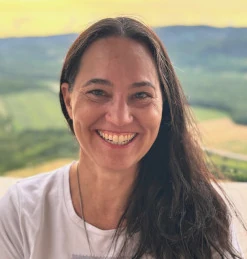
Nika Simčič
Administration
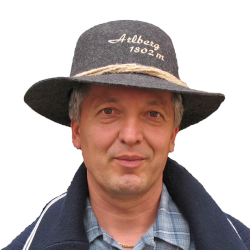
Tomaž Krištofelc
Technical Support

Emeritus

Gorazd Kandus †2026

In memoriam prof. dr. Gorazd Kandus

Z žalostjo smo se poslovili od prof. dr. Gorazda Kandusa, zaslužnega znanstvenika Instituta "Jožef Stefan", dolgoletnega vodje Odseka za komunikacijske sisteme, uglednega raziskovalca, mentorja in cenjenega sodelavca.

Prof. dr. Gorazd Kandus se je Institutu "Jožef Stefan" pridružil leta 1979 in na njem deloval vse do upokojitve konec leta 2016. Med letoma 1993 in 2010 je vodil Odsek za komunikacijske sisteme ter pomembno zaznamoval njegov raziskovalni razvoj in mednarodno uveljavitev. S svojim delom od zahtevnih razvojnih projektov za slovensko industrijo do mednarodno odmevnih raziskav na področju satelitskih, brezžičnih in mobilnih komunikacij je prispeval k razvoju sodobnih telekomunikacijskih tehnologij. Pod njegovim vodstvom se je odsek uveljavil na številnih novih raziskovalnih področjih, med drugim kot eden od pionirjev raziskav komunikacijskih sistemov preko stratosferskih ploščadi.

Kot priznan strokovnjak je z delovanjem v različnih nacionalnih delovnih skupinah in strokovnih svetih pomembno prispeval k razvoju sodobne telekomunikacijske infrastrukture in storitev v Sloveniji. Kot dolgoletni vodja odseka, večkratni član Znanstvenega sveta IJS ter član Komisije za intelektualno lastnino in Komisije za podelitev priznanj pa je pustil trajen pečat tudi pri delovanju in razvoju Instituta.

Prof. dr. Gorazd Kandus ni bil le cenjen strokovnjak, izjemen raziskovalec in uspešen vodja, temveč tudi predan mentor številnim mladim raziskovalcem in doktorandom, ki jih je usmerjal in spodbujal na poti k samostojni raziskovalni karieri. S prenosom znanja in izkušenj na mlajše generacije je pomembno prispeval k nadaljnjemu razvoju področja in kontinuiteti raziskovalnega dela na odseku.

Za svoje izjemne znanstvene dosežke, vzpostavitev novih raziskovalnih področij, predano mentorsko delo ter velik prispevek k mednarodni prepoznavnosti Instituta na področju telekomunikacij mu je bil leta 2017 podeljen naziv zaslužni znanstvenik Instituta "Jožef Stefan".

Gorazda bomo ohranili v hvaležnem spominu kot izjemnega znanstvenika, predanega vodjo in predvsem kot toplega človeka.

Alumni and Retirees

  • Ljupcho Milosheski, 2026
  • Tomaž Javornik, 2026
  • Andrej Hrovat, 2026
  • Mikhail Krasnov, 2026
  • Aleš Simončič, 2026
  • Aleš Švigelj, 2026
  • Marko Hudomalj, 2026
  • Grega Morano, 2026
  • Igor Tominec, 2026
  • Ahmad Anaqreh, 2025
  • Miha Mohorčič, 2025
  • Teodora Kocevska, 2024
  • Nina Verdel, 2024
  • Ivan Tomašić, 2024
  • Arsim Kelmendi, 2024
  • Filip Strniša, 2024
  • Mitja Jančič, 2023
  • Sebastjan Mrak, 2023
  • Marko Mihelin, 2023
  • Blaž Rojc, 2023
  • Din Mušić, 2022
  • Viktor Cvrtila, 2022
  • Tamara Matevc, 2022
  • Matevž Vučnik, PhD, 2021
  • Monika Kapus Kolar, PhD, retired, 2021
  • Igor Ozimek, PhD, retired, 2021
  • Viktor Avbelj, PhD, retired, 2021
  • Jure Slak, PhD, 2021
  • Halil Yetgin, PhD, 2021
  • Roman Trobec, PhD, retired, 2020
  • Rituraj Singh, PhD, 2020
  • Andrej Vilhar, PhD 2018
  • Kemal Alič, PhD, 2017
  • Urban Kuhar, PhD, 2017
  • Erik Pertovt, PhD, 2015
  • Marko Pesko, PhD, 2015
  • Melisa Junuzović, MSc, 2015
  • Adnan Bekan, MSc, 2015
  • Maria Porcius, MSc, 2012
  • Zoltan Padrah, MSc, 2011
  • Tine Celcer, PhD, 2010
  • Srečo Plevel, PhD, 2007
  • Igor Jelovčan, MSc, 2007
  • Igor Rozman, MSc, 2007
  • Marjan Šterk, PhD, 2005
  • Uroš Drčić, MSc, 2002
  • Gregor Pipan, MSc, 2000